
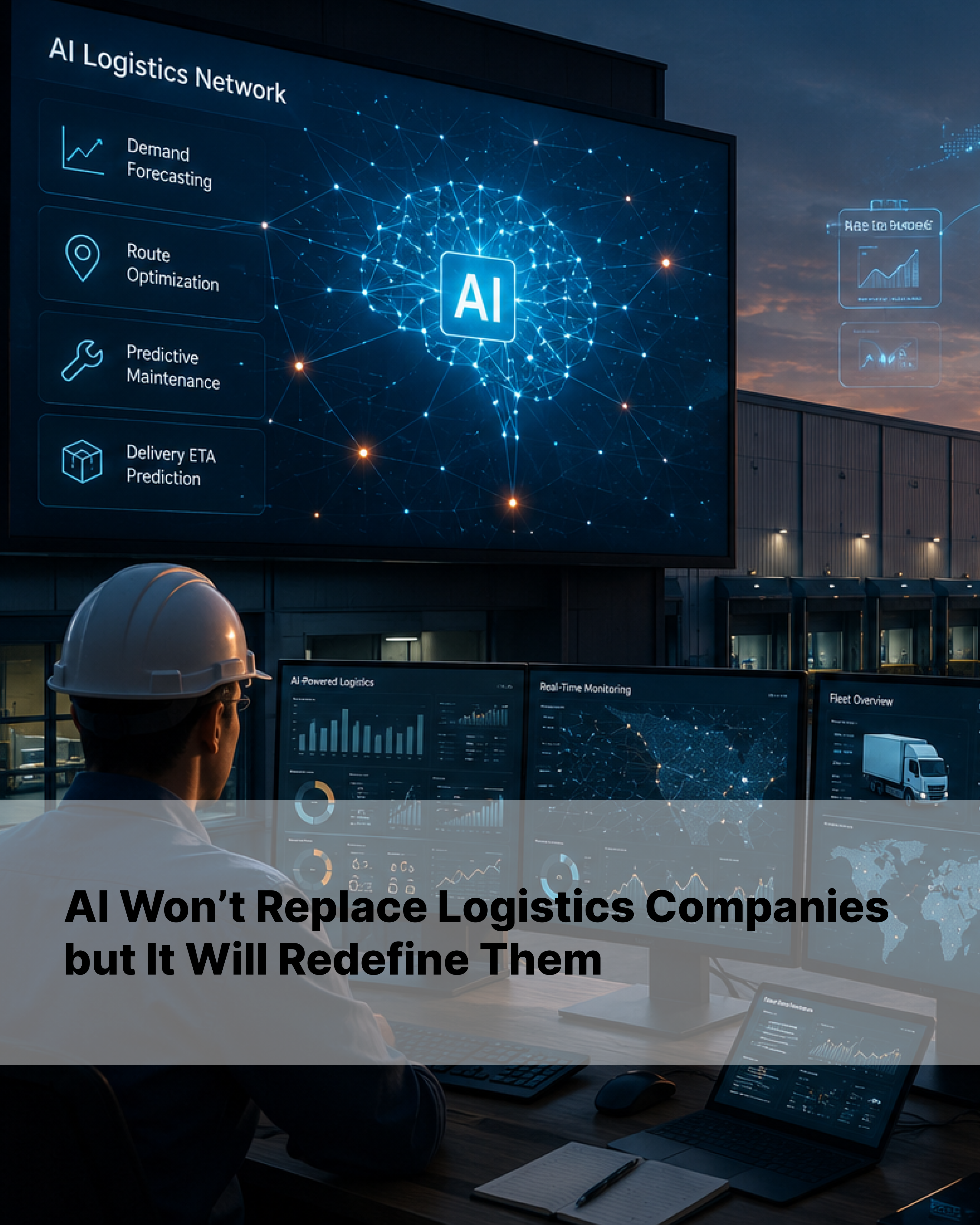
For years, logistics has quietly powered global commerce from the background. A package gets picked up, a shipment crosses borders, a tracking number updates and a delivery arrives. Simple on the surface, incredibly complex underneath.
Behind every successful shipment is a web of carriers, customs systems, warehouses, routes, pricing calculations, documentation, compliance checks, and human coordination. But now, AI is beginning to change that entire system, and the companies that adapt fastest may define the next era of global commerce.
A recent McKinsey report explored how AI is transforming freight logistics, from pricing and route optimization to document automation and shipment management. The conclusion was clear, AI is no longer an experimental tool in logistics, it’s becoming operational infrastructure. (McKinsey & Company)
The Logistics Industry Is Entering Its “AI Layer” Era
Historically, logistics operations have relied heavily on:
- manual coordination
- fragmented software
- spreadsheets
- emails
- phone calls
- disconnected carrier systems
Even today, many shipping operations still involve multiple dashboards, repetitive data entry, and slow communication between stakeholders. Community discussions across the freight industry consistently point to fragmentation and operational inefficiency as major problems. (Reddit)
AI changes that equation, instead of humans manually connecting every operational step, AI systems can now:
- compare shipping options instantly
- optimize delivery routes in real time
- automate documentation
- predict delays before they happen
- process invoices automatically
- monitor cargo movement continuously
- simplify customs workflows
This is especially important in cross-border ecommerce, where complexity grows exponentially with every new country, carrier, and regulation.
The future of logistics may not belong to the companies with the most trucks, it may belong to the companies with the smartest orchestration systems.
The Real Advantage Isn’t Just Automation
One of the most important insights from the McKinsey report is that AI alone is not enough. (McKinsey & Company)
Technology can automate tasks, but logistics still depends heavily on:
- trust
- operational experience
- carrier relationships
- real shipment data
- network scale
- customer reliability
That means the strongest logistics companies won’t simply “use AI.” they’ll combine AI with deep operational intelligence. In other words, AI becomes an accelerant, not a replacement.
This matters because many people assume AI will eliminate logistics intermediaries entirely. In reality, logistics is too dynamic and unpredictable for pure automation alone.
Weather disruptions, customs issues, regulatory changes, failed pickups, incorrect declarations and capacity shortages. Human judgment still matters, but AI dramatically increases the speed, visibility, and efficiency of decision-making.
Cross-Border Commerce Is Driving the Shift
The rise of global ecommerce is accelerating this transformation even further. Today, a small business in Bali can sell to customers in London, Toronto, or Dubai without opening a physical office overseas, that changes everything.
As cross-border commerce grows, businesses increasingly need:
- multi-carrier access
- transparent pricing
- real-time tracking
- customs support
- intelligent routing
- simplified international shipping
And they expect it instantly.
This is why logistics platforms are evolving from simple shipping tools into commerce infrastructure platforms. The companies that remove friction from global trade will become increasingly valuable.
AI Will Quietly Transform Logistics
The biggest changes may not look dramatic at first. In fact, the most successful AI systems in logistics may become nearly invisible. Not flashy, Just faster operations, fewer delays, smarter pricing, smoother shipping experiences, lower costs and better visibility.
As one logistics discussion put it “The industry doesn’t need louder tools, it needs ones that quietly remove friction.” (Reddit) That’s likely where the next phase of logistics innovation is headed. Not toward replacing people, but toward eliminating unnecessary complexity.
What This Means for the Future
The future of logistics will likely belong to companies that can combine:
- intelligent automation
- operational trust
- carrier ecosystems
- real-time data
- global accessibility
- human expertise
Because shipping is no longer just about moving parcels, it’s about enabling global commerce.
And with the ability of businesses to sell anywhere, logistics platforms are becoming one of the most important layers of modern economic infrastructure.
The companies building that infrastructure today won’t just deliver packages, they’ll help shape how the world trades tomorrow.
Create a free account with Pigee
share this post


