
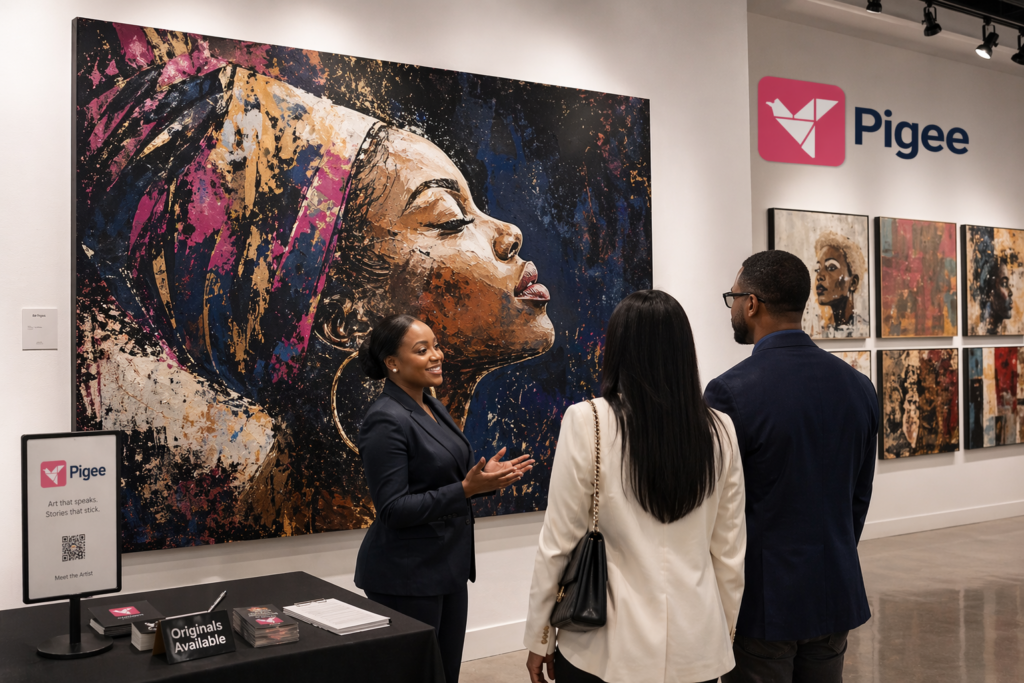
Most artists underprice their work, not because it lacks value, but because no one taught them how to position, present, and sell it. This guide changes that.
Why Artists Chronically Undercharge (And How to Stop)
There’s a painful pattern that plays out in the art world every day. A talented artist pours weeks into a piece, prices it at what “feels safe,” and watches it sell instantly, only to wonder if they left money on the table. They did.
Underprizing is almost never a market problem, It’s a positioning problem. Buyers don’t assign value based solely on the hours you worked or the materials you used. They assign value based on perception, story, and scarcity. Once you understand that, everything changes.
- Build a Brand, Not Just a Portfolio
The highest-paid artists in the world aren’t just talented, they’re recognizable. They have a signature style, a consistent visual identity, and a clear point of view that collectors buy into.
What this looks like in practice:
- A cohesive body of work that feels unmistakably you
- A professional online presence (website, not just social media) find out how you can create an online shop at pigee here
- A consistent artist statement that communicates your why, not just your what
- A name that collectors can Google and find a credible, polished presence
Think of your brand as the packaging around your art. A luxury perfume in a plain bottle feels ordinary. The same fragrance in a sculpted glass bottle feels rare. Your brand is your bottle.
- Price With Confidence, Not Fear
Pricing is where most artists sabotage themselves. Here’s a framework that makes it more objective:
The Baseline Formula:
Hourly rate × Hours worked + Cost of materials + 20–40% markup = Minimum price
Your hourly rate should reflect your experience, training, and market positioning, not what feels “acceptable.” A seasoned artist with a growing collector base should charge accordingly.
Then layer in:
- Size: Larger work commands higher prices, maintain a consistent price-per-square-inch or price-per-square-centimeter rate
- Series vs. one-off: Limited series feel more valuable than open-ended collections
- Edition number: For prints and reproductions, smaller editions = higher price per piece
And once you set a price? Don’t negotiate it down in public. Discounting trains buyers to wait for a deal. If you want to reward loyal collectors, do it privately.
- Master the Art of Storytelling
A painting is worth a thousand words. The story behind a piece dramatically increases its perceived value.
For every major work, document:
- The inspiration and concept behind it
- The process (audiences love behind-the-scenes content)
- The emotion you were working through or expressing
- The technique or material choice, and why it matters
Share this through blog posts, Instagram captions, short videos, and your artist statement. When a collector buys a piece, they’re not just buying the object, they’re buying the narrative that goes with it. That narrative is what they tell their guests when showing off the work.
- Choose Your Sales Channels Strategically
Not all platforms are equal, and where you sell signals how much your work is worth.
| Channel | Best For | Pricing Power |
| Your own website | Building collector relationships | High |
| Reputable galleries | Credibility and access to serious buyers | High |
| Art fairs | Visibility and direct sales | Medium–High |
| Instagram/social media | Discovery and marketing | Medium |
| Mass marketplaces (Etsy, Redbubble) | Volume, not premium pricing | Low |
If premium pricing is your goal, focus your energy on channels where premium buyers actually shop. A collector spending $2,000+ on art is not browsing random sites, they’re at gallery openings, following curators, and visiting art fairs.
- Create Scarcity and Exclusivity
Scarcity is one of the most powerful drivers of high price points in any market and it’s especially effective in art.
Practical ways to create scarcity:
- Limited edition prints: Release only 10, 25, or 50 of a given print. Number and sign each one.
- Series that close: Once a series sells out, announce it’s closed. Never reopen it.
- Waitlists: For in-demand work, a waitlist signals that your work is sought-after before someone even sees it.
- Collector previews: Give your best buyers early access to new work before it goes public.
When people feel like they might miss out, they decide faster and they question the price less.
- Exhibit Consistently and Strategically
Exhibition history is a real, tangible signal of value. A piece that has been shown in a curated gallery carries more weight than one that has only been sold online.
How to build exhibition credibility:
- Submit work to juried shows and open calls, even rejections build resilience and research skills
- Approach local and regional galleries with a professional submission package (artist statement, CV, quality images)
- Collaborate with other artists on group shows, shared costs, shared audiences
- Apply for artist residencies, which add to your professional biography
Every exhibition adds a line to your CV, and that CV is part of what justifies your prices to serious collectors.
- Cultivate Relationships With Collectors
The most successful artists don’t just have customers, they have collectors. A collector is someone who follows your career, buys multiple pieces over time, and tells others about your work. They are your most valuable asset.
How to build collector relationships:
- Keep a mailing list and send personal updates about new work and shows
- Remember names, preferences, and what pieces they’ve bought
- Offer collector privileges, early access, studio visits, behind-the-scenes updates
- Send handwritten thank-you notes after a sale
A collector who trusts you will pay your asking price without hesitation. They’ve already decided you’re worth it.
- Invest in Professional Presentation
Before a buyer sees the price tag, they see the presentation. Poor-quality photos, bad framing, or an unprofessional website will undercut your pricing no matter how strong the work is. Click this link to create an online shop to build credibility for your brand {link}
Non-negotiables for high-price positioning:
- Photography: Natural light or professional lighting, clean backgrounds, multiple angles, and detail shots
- Framing: Quality frames that complement, not compete with, the work
- Certificates of Authenticity: Include one with every sale, it adds formality and collector confidence
- Packaging: For shipped work, invest in proper, protective, beautiful packaging
The buyer should feel that buying from you is a premium experience from first click to delivery.
- Raise Your Prices Deliberately
If you’ve never raised your prices, you’re almost certainly undercharging. Price increases should be:
- Gradual: 10–20% increases are easier for existing collectors to absorb than sudden jumps
- Tied to milestones: A new gallery relationship, a sold-out series, or press coverage are natural moments to raise prices
- Announced: Let your mailing list know when prices are going up, it often triggers purchases before the increase kicks in
The goal is a steady upward trajectory. Artists who keep prices flat for years send a signal (unintentionally) that their career isn’t growing. Rising prices signal a rising career.
- Get Press and Social Proof
Credibility is transferable. When a respected publication, blogger, or influencer writes about your work, that credibility attaches to your name and to your price.
Ways to earn press and social proof:
- Reach out to art bloggers and journalists with a compelling story angle
- Submit to “artist spotlights” in relevant online publications
- Share testimonials and collector quotes (with permission)
- Leverage any media mentions prominently on your website and social profiles
Social proof answers the buyer’s unspoken question “Is this artist really worth it?” Let others answer that question for you.
Final Thought
One of the biggest hurdles for artists trying to sell at premium price points is building the kind of trust that high-value buyers expect. Higher-value purchases usually require more reassurance than a standard retail item, buyers want clear delivery information, credible artist presentation, and confidence that the business side is organized.
Pigee addresses this directly by giving artists a polished, collector-ready checkout experience. Its checkout flow feels like ordering from a luxury retailer, fast, polished, and secure, which is exactly the impression an artist needs to make when asking collectors to spend serious money.
For artists still learning how to position their work at higher prices, this professional infrastructure does a lot of the heavy lifting.
Pricing art confidently also means being transparent about the full cost of ownership, including delivery. Artists often worry about hidden courier fees, Pigee’s live quote generator compares carriers and gives the real, final shipping price upfront. This matters enormously when selling at high prices, because a collector who is surprised by an unexpected shipping bill after agreeing to pay a premium for a piece is unlikely to complete the purchase.
Pigee also allows galleries and artists to charge for professional packaging directly within the payment link, ensuring sellers are compensated for their time and materials, a detail that helps artists communicate the full value of what they’re offering, rather than absorbing those costs and quietly undercutting their own pricing.
Create a free account here or book a demo
share this post.


