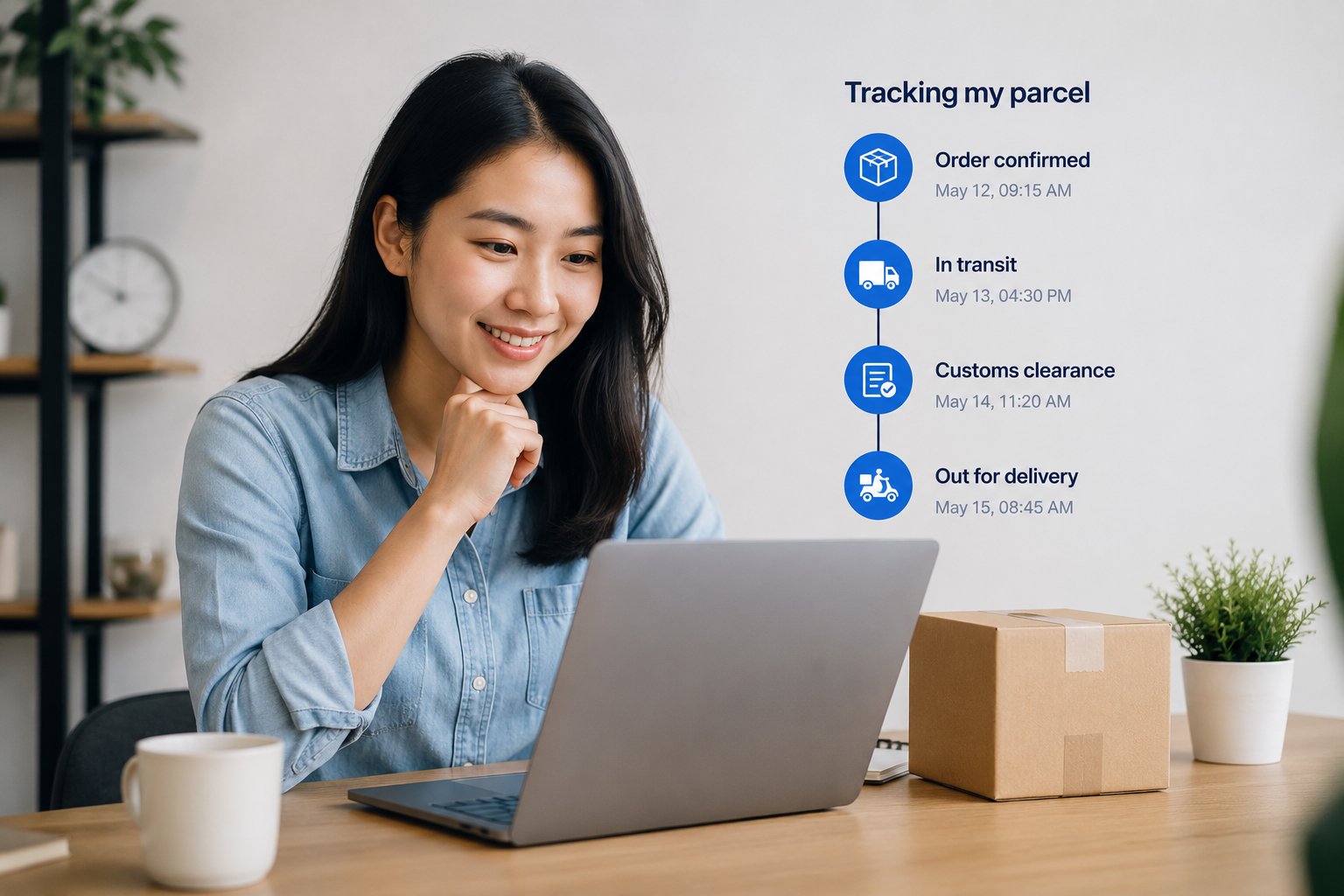
Sending a parcel internationally can feel straightforward at first.
You package the item, complete the paperwork, hand it over to a courier, and share the tracking number with your customer.
Then the updates stop.
The customer wants to know where the parcel is. You are checking different carrier websites. The shipment says “in transit” for days. Nobody is sure whether it is moving, waiting at customs, or delayed somewhere along the route.
For businesses shipping across borders, this is one of the most common frustrations.
International parcel tracking is not just about watching a package move from one location to another. It is about giving businesses and customers confidence that an order is still on its way.
Here is why tracking international parcels matters, the common issues businesses face, and how Pigee helps make global shipping easier to manage.
Why International Parcel Tracking Matters
When a customer buys from a business in another country, they are already taking a leap of trust.
They may not know the seller personally. They may be unsure about delivery timelines, customs fees, or what happens if the parcel is delayed.
Tracking helps reduce that uncertainty.
A clear tracking experience gives customers useful answers:
- Has the parcel been dispatched?
- Has it left the origin country?
- Is it waiting for customs clearance?
- Has it arrived in the destination country?
- When is it likely to be delivered?
For businesses, tracking also makes customer support easier.
Instead of spending time responding to “Where is my order?” messages, merchants can check the shipment status and share clear updates.
Why Tracking International Shipments Can Be Difficult
International parcels often pass through multiple stages before delivery.
A shipment may move from a local pickup point to a warehouse, then to an airport, through customs, into a destination-country hub, and finally to a last-mile delivery partner.
At each stage, the tracking experience can change.
Here are a few reasons international tracking can become confusing.
Different Carriers, Different Tracking Systems
A parcel may begin its journey with one courier and be handed over to another carrier in the destination country.
This can lead to tracking updates appearing in different places or using different terms.
For example, a package may show “departed facility” with one carrier, then appear to stop updating until the next carrier scans it.
Delayed Tracking Updates
Tracking is not always updated in real time.
Some updates only appear when a parcel reaches a major hub or is scanned at a new location. If a package is moving between countries or waiting for a flight, there may be no visible update for several days.
This does not always mean the parcel is lost. But without context, it can be worrying for both the sender and the recipient.
Customs Clearance Holds
Customs is another major reason tracking can appear frozen.
A parcel may be waiting for an inspection, additional documentation, or payment of duties and taxes. During this time, the tracking status may remain unchanged until customs clearance is completed.
Limited Visibility After Handover
When a shipment moves from an international carrier to a local delivery partner, visibility can reduce.
The business may know the parcel has reached the destination country but may not have a clear update on the final delivery stage.
How Businesses Can Improve International Parcel Tracking
While not every delay can be avoided, businesses can make tracking easier and more reliable.
- Choose Shipping Options With End-to-End Visibility
Before booking a shipment, ask whether the carrier provides tracking from pickup through final delivery.
End-to-end tracking gives both the sender and recipient a clearer view of the parcel’s journey.
- Share Tracking Information Early
Customers should receive a tracking number as soon as the parcel is dispatched.
It is also helpful to explain what the tracking status means. For example, “in transit” does not always mean the parcel is actively moving every hour. It may be waiting for the next scan or transport stage.
A simple delivery update can prevent unnecessary worry.
- Keep Documentation Accurate
Missing invoices, incorrect product descriptions, or incomplete customs forms can slow down a shipment and make tracking appear inactive.
Accurate documentation supports smoother customs clearance and fewer unexpected delays.
- Set Realistic Delivery Expectations
International delivery timelines can vary based on the destination, customs processes, carrier capacity, and the service selected.
Avoid promising delivery dates that are too tight. Instead, give customers a realistic delivery window and communicate quickly if something changes.
How Pigee Helps Businesses Track International Parcels
Pigee helps businesses make international shipping less stressful.
Rather than leaving merchants to navigate multiple tracking portals, customs questions, and carrier updates alone, Pigee provides support throughout the shipping journey.
With Pigee, businesses can:
- Track international parcels with better visibility
- Get support when shipment updates are unclear
- Understand common shipping and customs statuses
- Prepare shipments with the right information from the start
- Make smarter decisions about shipping options
- Keep customers informed with greater confidence
Pigee Shipping Assistant can also help merchants get quick answers to common questions, such as:
- Why has my tracking not updated?
- What does “in transit” mean?
- Is my package stuck at customs?
- How long will international delivery take?
- What should I do if my parcel is delayed?
Instead of searching across multiple websites, businesses can get the information they need in one place.
Tracking Builds Trust
For customers, tracking is more than a feature.
It is reassurance.
When customers can see that their parcel has been dispatched, is moving through customs, or has arrived in their country, they are more likely to feel confident about their purchase.
For businesses, that confidence can lead to fewer support messages, stronger customer relationships, and more repeat orders.
Final Thoughts
International shipping comes with many moving parts. But customers should not feel left in the dark after they place an order.
Reliable international parcel tracking helps businesses stay informed, communicate clearly, and manage delays before they become bigger problems.
With Pigee, merchants can ship with more visibility, get answers faster, and give customers a smoother delivery experience from dispatch to doorstep.
Create a free pigee account here
Share this article.