
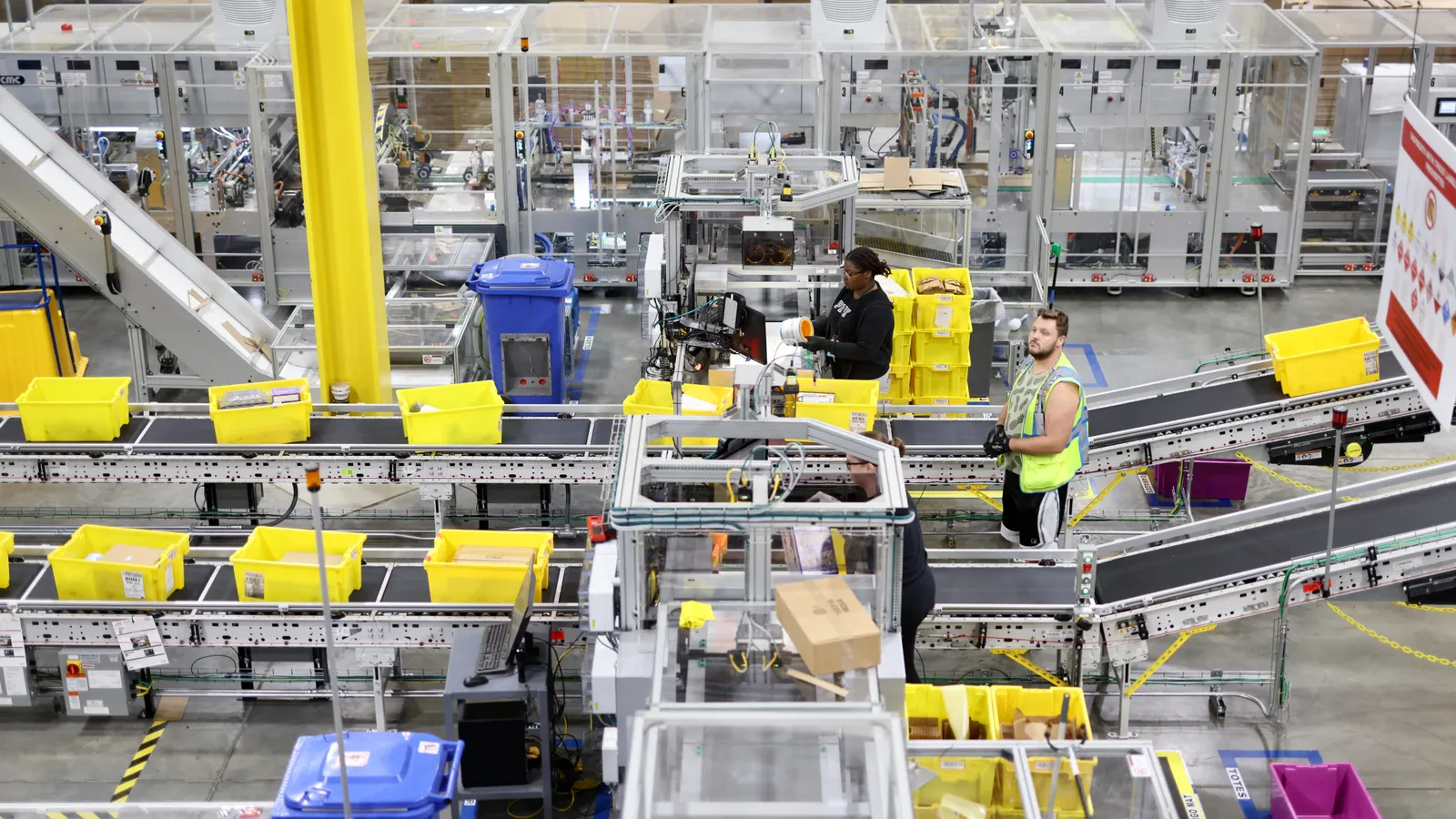
Amazon is moving forward with plans for a new robotics-equipped sorting warehouse in Texas, adding another node to its already sprawling fulfillment network. The facility will lean heavily on automation to move packages faster and more efficiently, reflecting a broader push across the company’s supply chain operations. For anyone watching the logistics sector, this is another signal that automation is no longer a side experiment but a core strategy.
The move comes as e-commerce continues to demand faster turnaround times and tighter cost control. Warehouses that once relied primarily on manual sorting are increasingly being redesigned around robotic systems that can scan, sort, and route packages with minimal human intervention. As a result, facilities like this one in Texas are becoming the new standard rather than the exception.
Why a Robotics-Equipped Sorting Warehouse Matters
A robotics-equipped sorting warehouse is not just about speed. It also represents a shift in how large logistics players think about labor, space, and long-term investment. Automation allows companies to process higher volumes without proportionally increasing headcount, which changes the economics of running a fulfillment network at scale.
For Amazon specifically, expanding automation across its supply chain suggests continued confidence in e-commerce growth. The company is effectively betting that demand will keep rising and that robotics will be necessary to keep pace without sacrificing delivery speed. This kind of investment also puts pressure on competitors to modernize their own sorting and fulfillment operations or risk falling behind on efficiency and cost per package.
What It Means for Smaller Operators
While a robotics-equipped sorting warehouse of this scale is well beyond the budget of most small and mid-sized logistics businesses, the underlying trend still matters. Larger players setting new benchmarks for speed and accuracy tend to shift customer expectations across the entire industry. Shoppers who get used to fast, error-free delivery from major retailers often expect the same from smaller couriers and local delivery services.
This creates both a challenge and an opportunity. Smaller operators cannot necessarily compete on robotics investment, however they can compete on flexibility, personalized service, and smart use of technology in other parts of their operations. Efficient route planning, clear communication with riders, and reliable payout systems can help independent delivery businesses stay competitive even as automation reshapes the top of the market.
The Bigger Picture for Logistics Investment
Amazon’s continued spending on automated fulfillment infrastructure also signals where investor attention in logistics is likely headed. Warehouse automation, robotics integration, and last-mile efficiency are becoming key areas where capital is flowing. Operators and investors watching the sector should expect more announcements like this one as major retailers race to control costs while scaling volume.
For smaller logistics and delivery businesses, the takeaway is not to chase robotics investment they cannot afford, but rather to focus on operational efficiency wherever possible. Streamlining internal processes, even without heavy automation, can help smaller companies stay agile as the broader industry moves toward more automated fulfillment models.
If you run a delivery business and want a simpler way to manage riders, routes, and payouts without needing warehouse-scale robotics, it’s worth taking a look at Pigee Courier. It brings the essentials of delivery management into one dashboard, helping smaller operators stay organized and competitive as the logistics landscape continues to evolve.
Try Pigee Courier: https://courier.pigeepost.com/


